My PhD Journey in Educational Technology
Hi, my name is Adrian Granchelli and I am a PhD student in Educational Studies at the University of Victoria. I am researching the evolving area of generative artificial intelligence (GenAI) in education and how process-based educational practices can be used to mitigate emerging challenges. GenAI is reshaping how we teach, learn, and relate to knowledge, challenging us to understand how these powerful tools might be used to shape more personalized, creative, and human-centred learning experiences. This work builds upon my Masters of Educational Technology (2022, University of British Columbia) and multidisciplinary experience from teaching to engineering, makerspaces, and interactive design.
My work is grounded in a constructivist perspective that views and supports learners in creating meaning through personal experience, hands-on exploration, and experiential learning across physical and digital environments. This perspective is also personal: I am a maker at heart and thrives on experimentation, exploring how play, design, and technology intersect through interactive art practices ranging from woodworking to digital fabrication and coding.
I am currently the instructor for EDCI 337: Interactive & Multimedia Learning which allows me to further explore process-based pedagogies in both my own teaching and by supporting students as they develop their own educational content.
When I am not researching, teaching, or designing, I am in the wilderness—rock climbing, camping, snowboarding, or volunteering with Comox Valley Search and Rescue. I live on the unceded territory of the K’òmoks First Nation (Courtenay, BC, Canada) and go by he/him pronouns.
University of Victoria, 2025 – 2029
-
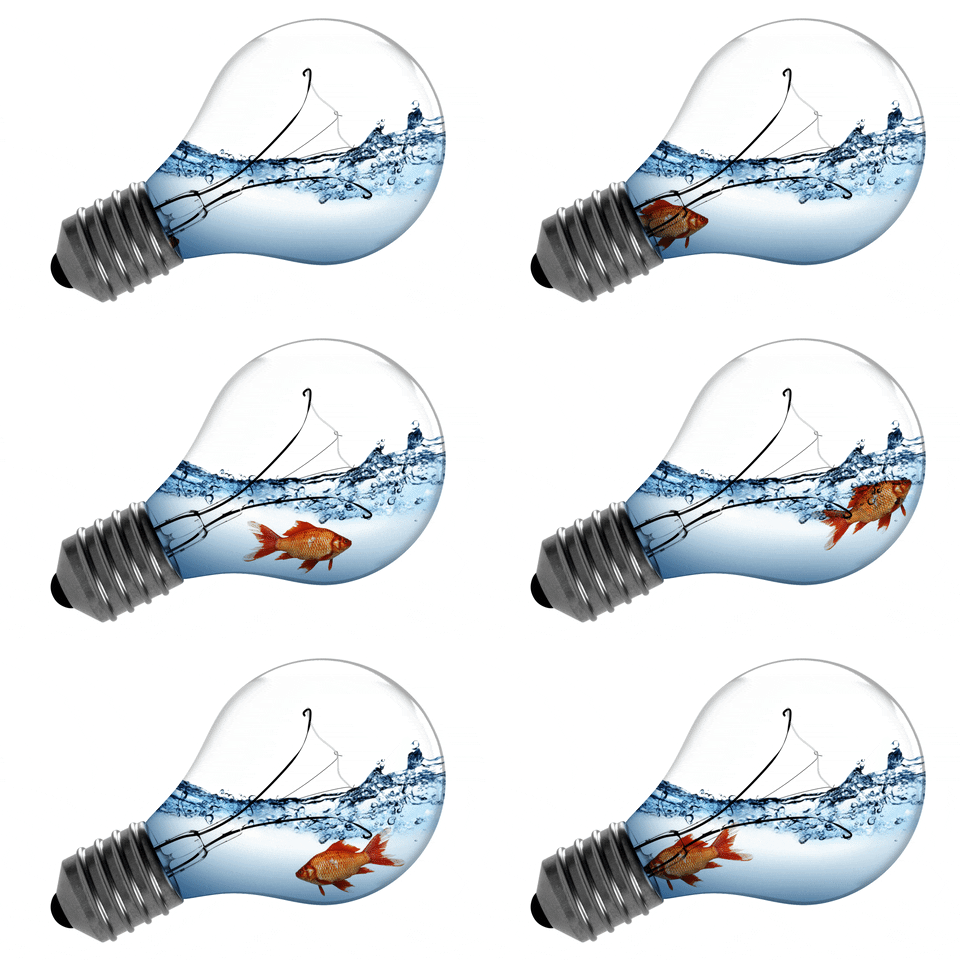 where is the room for original and unusual ideas?
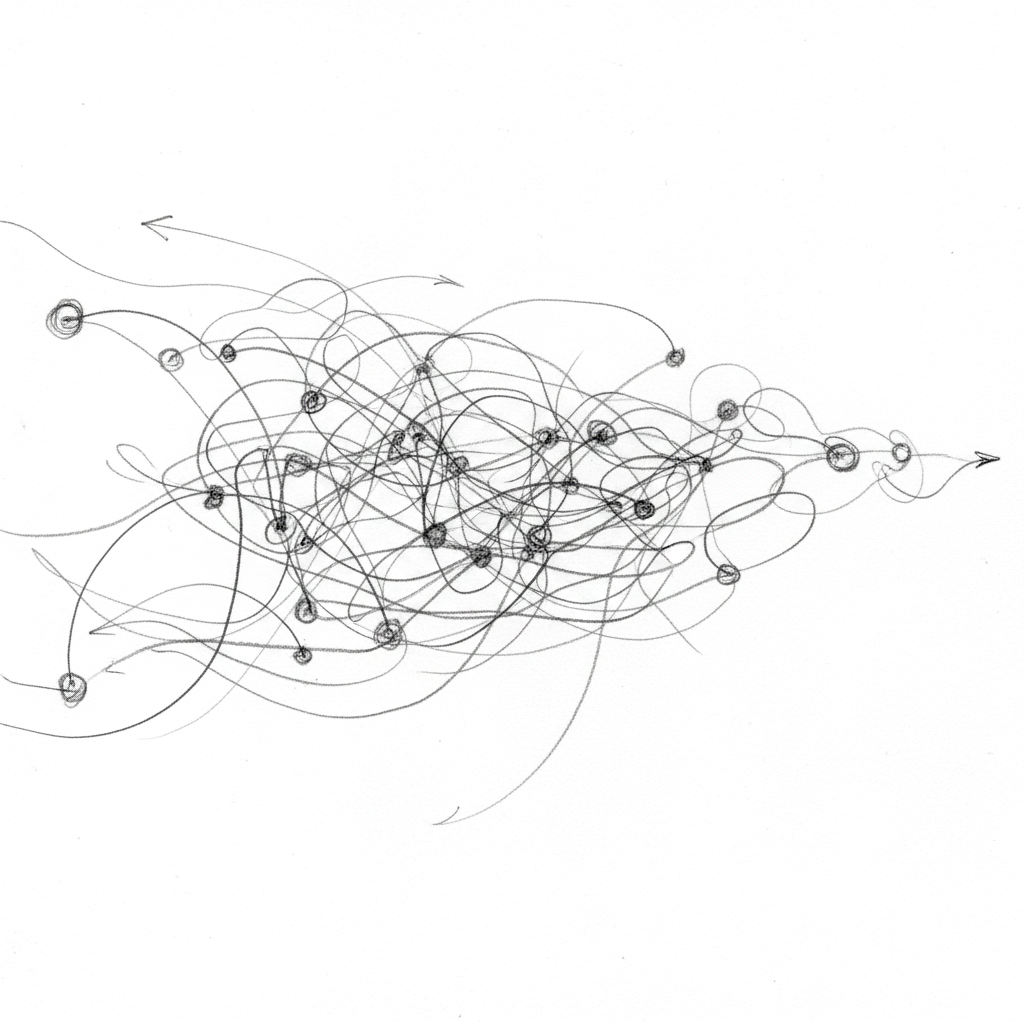
Creativity noun kriː.eɪˈtɪv.ə.ti the ability to produce original and unusual ideas, or to make something new or imaginative – from the Cambridge Dictionary Why Man Creates (Bass, 1968) From social structures and fire, to the wheel, the internet, and ideas, humans have always created; however, the trait, creativity, as a personality trait, was only invented…
-
 Cultivating Creative Confidence in Design Education: Design-Based Research in the Age of GenAI
I am in the second year of a PhD program in Educational Studies at the University of Victoria, researching how mediated learning environments may influence and develop creative self-belief. My dissertation, Cultivating Creative Confidence in Design Education: Design-Based Research in the Age of GenAI, will expand on my Master’s in Educational Technology research and professional…
-
Exploring Cognitive Offloading in a Learner-GenAI Collaboration in Design
As my research has progressed, I have explored ideas, followed emerging developments, and engaged in ongoing writing, discussion, and reflection. Through this process, my initial thinking and direction have evolved. Six months ago, I outlined my first research problem (published here), noting that my work was spiralling, continually circling toward a core concept, shaped by…
-
Accreditation in Research and Publications
Collaboration is incredible beneficial to everyone involved. It invites more ideas, thoughts, perspectives, that deepens understanding and strengthens the output. In academia, this is of utmost importance to truly understand a subject area, ensure that personal biases are addressed, and to develop a strong output. Collaboration is not only beneficial, it can also be advantageous…
-
Exploring an Alternative Dissertation Assessment Rubric
I am surprised to find a lot of ambiguity in not only how a dissertation is assessed but also on what the purpose of a dissertation is. If we are to employ backward design for the dissertation, then we should start by defining the learning objectives, then the assessment strategies, and finally the learning activities. …
-
Exploring Alternative Dissertation Precedence
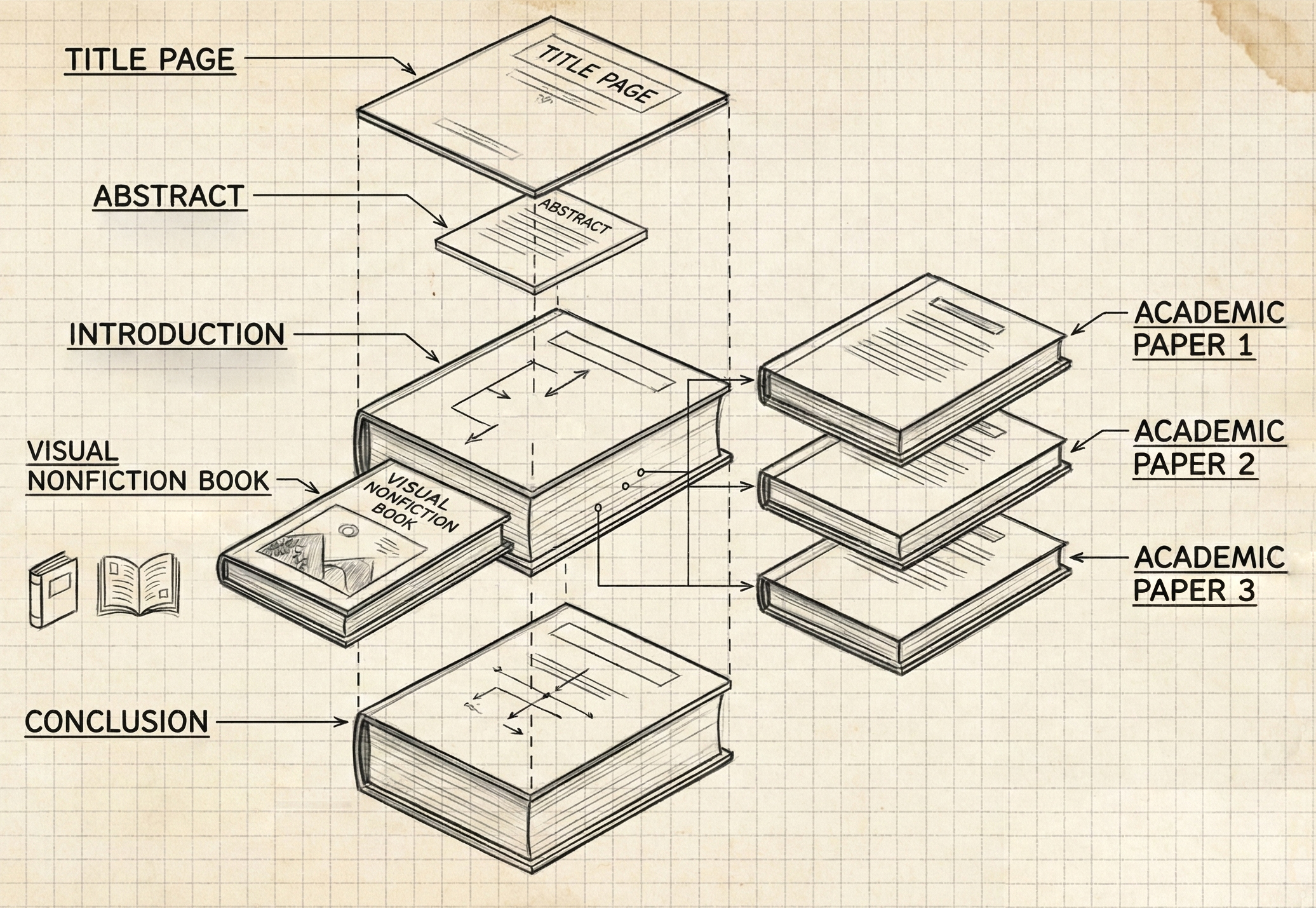
The format of an alternative dissertation needs to match both the purpose of the final product and research subject. I am drawn to the visual nonfiction medium (or ‘coffee table book’) for the ability to leverage visual hierarchy, typography, colour, and images to communicate ideas. This medium is far more accessible than the traditional APA…
-
Exploring My Potential Dissertation MediumAdrian’s Choice · Dissertation Design · Education Practice & Theory · PhD in Educational Technology · User Experience
The Dissertation Norm The traditional dissertation format is to translate doctoral research into a 200+ page manuscript that strictly adheres to the APA guidelines: a title page, double-spaced text, a subtle text hierarchy, etc. Aesthetically, it is lifeless, and from my understanding, lifeless it lives in a university library archive where very few people read…
-
Assessing Writing of Undergraduate Students in a GenAI World
The final phase of the Double Diamond design process is to converge the solution space, ultimately to one final solution for the problem. Within the problem space of assessing writing of undergraduate students in a generative artificial intelligence (GenAI) world, the problem to solve is: “How can we make the learning that occurs while writing…
-
Assessing Writing of Undergraduate Students in a GenAI WorldDesign Process · Education Practice & Theory · Generative Artificial Intelligence · PhD in Educational Technology · User Experience
I am exploring the problem space of assessing writing of undergraduate students in a generative artificial intelligent (GenAI) world through a double diamond design process. I first explored the problem space in order to better understand the problem, in Attempting to Define a Wicked Problem, before converging on a singular problem statement, in Converging a…
-
Exploring Affordances and Limitations of Generative Artificial IntelligenceDesign Process · Education Practice & Theory · Generative Artificial Intelligence · PhD in Educational Technology · User Experience
Good designers need to engage in many perspectives, oftentimes simultaneously. That is, the ability to move fluidly between different frames of mind throughout the process, from managerial to focused and from divergent to convergent. Additionally, strong and confident design emerges from the ability to integrate and leverage external support and diverse perspectives—to see things how…
-
Assessing Writing of Undergraduate Students in a GenAI WorldDesign Process · Generative Artificial Intelligence · PhD in Educational Technology · User Experience
Using the Double Diamond design process, I began exploring the problem space of assessing undergraduate writing in a generative artificial intelligence (GenAI) context. I examined the literature and conducted simulated stakeholder interviews to understand the extent and nuance of the challenge. You can view the whole journey here: Attempting to Define a Wicked Problem. This…
-
A Literature Review
-
Insights for Shaping My Own Dissertation
I reviewed three dissertations related to my interests to gain an understanding of what the final product of my own dissertation may look like. I initially searched for process-oriented assessment practices and process pedagogy. Somewhat surprisingly, this resulted in dissertations mostly in writing education. From my current understanding, process pedagogy can be applied across disciplines,…
-
A Review of Three Academic Journals
This is a brief review of three academic journals that are applicable to my area of study. In choosing which journals to review, I turned to publications that I have found impactful throughout my SSHRC and literature review process. Prior to this process, I paid little attention to scholarly journals beyond their credibility. Quickly, it…
-
Assessing Writing of Undergraduate Students in a GenAI World
The emergence of GenAI is revealing a fundamental flaw to the assessment of writing as large language models (LLMs) are capable of instantly generating text that is indistinguishable from a human (Nikoli et al., 2024). Human-centred design recommends that one should “start by trying to understand what the real issues are” (Norman, 2013, p. 218),…
-
Human-Centred Design, Generative Artificial Intelligence, and EducationAdrian’s Choice · Generative Artificial Intelligence · PhD in Educational Technology · User Experience
Human-Centred Design in Education Human-centred design (HCD) is a philosophy and practice of design that utilizes a holistic viewpoint, placing humans at the core of every consideration (Norman, 2013, 2016). It recognizes a complex, interconnected system and seeks to benefit the system as a whole, acknowledging that optimization of the local does not always benefit…
-
Five Levels of Technology Integrated EducationAdrian’s Choice · Education Practice & Theory · Generative Artificial Intelligence · PhD in Educational Technology
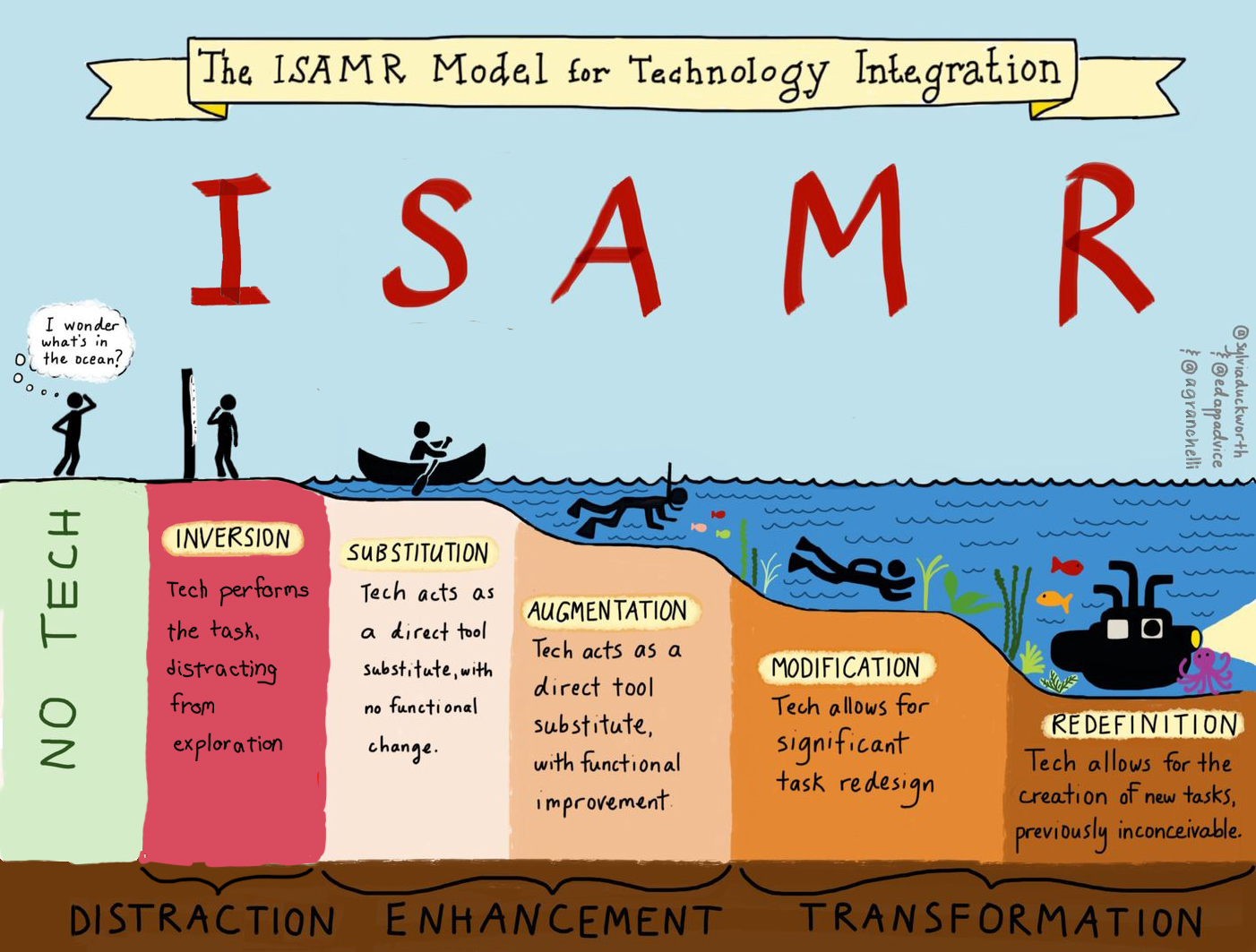
My remix of Sylvia Duckworth’s (2019) infographic of SAMR ISAMR is the combination of the SAMR and ISAR models The SAMR model, developed by Puentedura (2016), is a guide for the effective integration of technology into teaching and learning. It offers four levels of technology integrated learning including substitution, augmentation, modification, and redefinition. The ISAR…
-
emergent process-based strategies for writing assessment in the age of large language models
Research, the process of collecting and analyzing information to increase our understanding, is a daunting and wide-ranging undertaking. The topic, purpose, problem, question framework provides a structured way to organize ideas and think more deeply about the what of research. Yet, when there are so many curiosities, interests, and problems in this world, how does…
-
emergent process-based strategies for writing assessment in the age of large language models
Competition Results: not funded I am in the first year of a four-year PhD program in Educational Studies at the University of Victoria (UVic). My dissertation will further my Master’s in Educational Technology research by exploring Emergent Process-Based Strategies for Writing Assessment in the Age of Large Language Models (LLMs). I bring expertise in process-based…
-
Connecting the Dots That Brought Me Here
My name is Adrian Granchelli. I was born in Italy, before moving to North Vancouver, Canada where I grew up in a traditional Italian household with extended family. I am a settler to all the lands I have called home, from the greater Vancouver area to the Kootenays and currently live on Vancouver Island in…
-
what the effect of generative artificial intelligence may have on user experience
Human emotions, through sensory engagement and the perception of a technology, strongly influences the use of that technology (Berni & Borgianni, 2021). This focus on the human experience is at the core to User Experience (UX) and manifest when developing the tangible aspects of design such as utility, usability, function, and interface (Berni & Borgianni,…
-
Human-AI Collaboration in K-12 Applied Design, Skills and Technologies Education
A little note on context. At the time of writing this, I was exploring PhD programs. I met with some people in person where I first heard about the SSHRC fellowship award just a couple weeks before the deadline. The proposal that follows I developed with minimal time and support and provided the opportunity to…