Creativity
noun
 kriː.eɪˈtɪv.ə.ti
the ability to produce original and unusual ideas, or to make something new or imaginative
- Too many rules might deaden creativity.
- Creativity, ingenuity, and flair are the songwriter’s real talents.
– from the Cambridge Dictionary
Why Man Creates (Bass, 1968)
From social structures and fire, to the wheel, the internet, and ideas, humans have always created; however, the trait, creativity, as a personality trait, was only invented in the mid 20th century. Dr. Samuel W. Franklin, the author of The Cult of Creativity, unpacks this history in the following episode of Throughline: No Bad Ideas. The desire for creativity emerged in the Cold War era, out of a fear of conformity and computers and a need for innovation (these conditions sound all too relevant in 2026). It wasn’t until relatively recently that creativity had such a large role in society and education. Research in creativity followed suit, accounting for only 0.2% of all psychological research in 1950 (Guilford, 1950).
No Bad Ideas (Abdelfatah & Arablouei, 2023)
Now, half a century later, creativity is widely seen as a core competency of education (Organisation for Economic Co-operation and Development [OECD], 2023), for similar reasons as the advent of creativity (i.e., innovation, knowledge creation, emerging challenges). On an individual level, creativity “can support a range of other skills including metacognitive, inter- and intra-personal and problem-solving skills, as well as promoting identity development, academic achievement, social engagement and career success” (OECD, 2023, p. 141). Locally, the Province of British Columbia (2015) labels creative thinking (one of only seven competencies) as a necessary skill for navigating complex futures.
“there should be no doubt that the centrality of humans in the future will depend fundamentally on their adaptive performance related to non-routine tasks, requiring flexibility of mind, capacity to take decisions based on incomplete information, intuition, problem solving ability, artistic and aesthetic sense: in a word, on their creativity”
Corazza, 2016, p. 259
However, there remains a gap between what education values and the realities of educational contexts, including standardization, assessment, overextended teachers, and the rapid advancement and adoption of genAI-powered tools. This gap may threaten human creativity, but it also underscores the growing need for it.
Creativity and GenAI

Click Generate
GenAI-powered tools can rapidly generate human-like products such as text, code, and images. In some instances, this ability has displaced human workers and there is an evident, culturally held fear of this occurring more frequently. However, it is more likely that genAI will change the market and shift work. As an example, genAI’s ability to read medical imagery led to a fear it will displace human radiologists. In practice, as reported by Goldstein (2026), the powers of genAI reduced the cost for imagery (affecting the supply side), and with drastically lowered costs, the demand. Now, the opposite is true, more radiologists are needed due to the adoption of genAI. But I digress, because the fact that a tool can generate creative products without any creative work affords skipping human input or thought. Lupi (2026) outlines how the process of creating may be messy and slow but that is the point—”anything worth remembering came from a person who did not know where she or he was going until arriving.”
Homogenization of Voice
GenAI-powered tools are currently statistically correlative prediction machines—that is, they tend to deliver the average of their training data (Bender et al. (2021) offers the fantastic imagery of a genAI as a stochastic parrot). Unlike people and books, which offer knowledge shaped by individual experiences, genAI-powered tools tend to generate similar responses across similar prompts. Therefore, with prevalent genAI use, there is a risk of homogeneity where only the most popular cultural, linguistic, and artistic ideas prevail.
This problem is magnified as genAI is given unprecedented authority, especially by novices that doubt their own voice, leading people to accept its outputs (Krajcer et al., 2026) resulting in “a uniformity of thought and a reduction in the diversity of ideas and perspectives … a one- size- fits- all answer” (Farinosi & Melchior, 2025). The homogenization and acceptance of genAI outputs has implications in creative work. Al-Sa’di and Miller (2026) found unmediated use of genAI-powered tools produced less creative output than working without them; however, when genAI made its reasoning visible throughout the process, humans were better able to understand and contribute to the work, resulting in the most creative outputs. This highlights the nuances of genAI use, as how, why, and when it is used in the design process influence its potential benefits and harms.
Let’s take a step back
and understand
what is
creativity or creative thinking
“creativity is understood as activity that leads to outcomes that are original (novel) and relevant (appropriate, useful).”
Runco & Jaeger, 2012,
as cited by Karwowski et al., 2022 (p. 229)
“the ability to create something that is both original and appropriate in a given context, involving originality, adaptability, and relevance”
Runco and Jaeger, 2012 & Sternberg & Lubart, 1999,
as cited by Sevimli-Celik & Güvelioglu, 2026 (p. 1)
“a psychological factor which consists of fluency, originality, novelty, and sensitivity”
Guilford, 1950, as cited by Choi et al., 2025 (p. 2075)
“creativity [is] creating original and appropriate ideas to achieve a goal“
Amabile, 1982, as cited by Choi et al., 2025 (p. 2075)
“creative thinking involves the generation of ideas and concepts that are novel and innovative in the context in which they are generated, reflection on their value to the individual or others, and the development of chosen ideas and concepts from thought to reality.”
Province of British Columbia, 2015
It’s important to note that these definitions are remarkably similar for such a complex construct in academic research (Karwowski et al., 2022). Multiple modern sources reference Runco and Jaeger’s (2012) article, with quite the definitive title: The Standard Definition of Creativity, where Runco and Jaeger examine the history of the construct. Simply put, “The standard definition is bipartite: Creativity requires both originality and effectiveness” (p. 92), (though they do go on to say, maybe only one criterion is needed or maybe there’s a third one: surprise).
This standard definition however is static; it implies a judgement of the outcomes, yet originality and effectiveness cannot be absolutely assessed. Originality, in particular, is a relative measure, so what is the baseline in which creative works are measured against and by whom? Corazza (2016) argues creativity is dynamic and necessitates inconclusiveness in the process. Recognizing that creativity varies across contexts (i.e., time and place, domain and culture, assessor). They propose that “creativity requires potential originality and effectiveness” (p. 262).
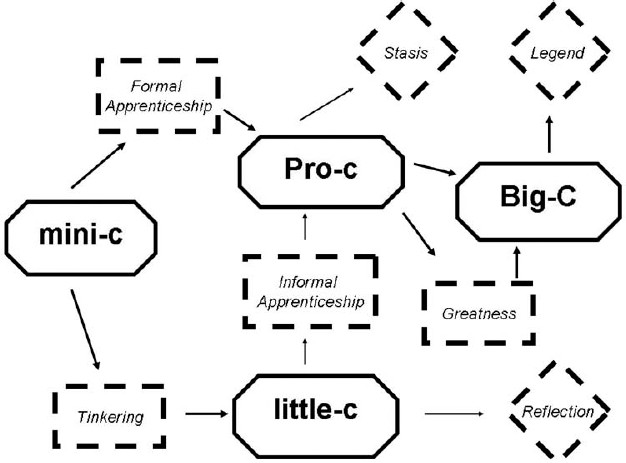
Kaufman and Beghetto (2009) further refine creativity with the Four C Model of Creativity. They introduce magnitudes of creative acts:
- Mini-c: “novel and personally meaningful interpretation of experiences, actions, and events” (Beghetto & Kaufman, as cited by Kaufman & Beghetto, 2009, p. 3). This can be personal realizations and explorations.
- Little-c: everyday innovation; tangible and shareable creative works
- Pro-c: professional creators, paid for their creative works
- Big-C: eminent accomplishments, creative works that may last centuries
When we consider the criteria of novelty prevalent in the standard definition of creativity, we may deduce that Big-C creative is novel with respect to the world, Pro-c with respect to domain experts, Little-c with respect to peers, and Mini-c with respect to the self (Beghetto, 2024).
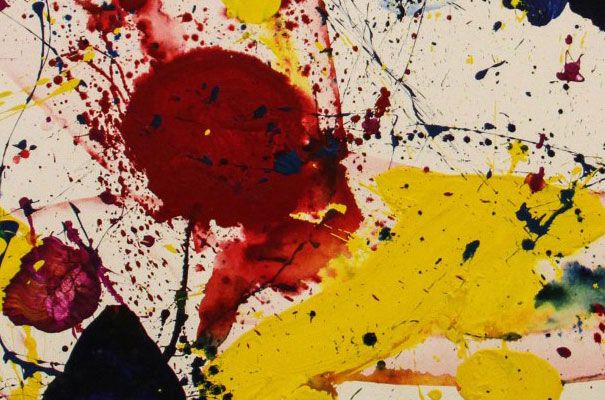
Although many scholars tend to agree on the definition of creativity, I am still not convinced that one’s creativity should be determined by their products relative to others. It will need to wait for another time to fully elaborate my rationale, though it stem around the idea that creativity is a process, not a product. “[T]he difference between what you see and a designer sees” is the entire premise of a podcast: 99% Invisible (where the name implies that just 1% of what goes into a design is visible at the end). Secondly, consider abstract art. Try this quiz, where the success rate is 59%, collapsing the boundaries of Little-C and Big-C: Toddler Art or Modern Art? Can you tell if a painting is the work of a small child or a famous modern artist? Hawley-Dolan and Winner’s (2011) study on the same topic found an approximate 70% success rate.
Are GenAI-powered Tools Creative?
Given our definition of creativity, are genAI-powered tools creative? There is an important distinction here to be made between the trait of creativity and the ability to produce creative works. Creativity as a trait may often lead to the production of creative works, however production of creative works does not imply creativity. It has been shown that genAI-powered tools are capable of producing creative works and demonstrate ‘creativity’, though often measured through testing (e.g., Bellemare-Pepin et al., 2026; Gilhooly, 2024; Hubert et al., 2024; Koivisto & Grassini, 2023; Wang et al., 2025). Two of these common tests measure creativity through the singular dimension of divergent thinking:
- alternative uses task, where given a common object, one is to brainstorm the most unusual uses of it
- divergent association task, where one is to generate ten nouns with the greatest variance (try it, it’s fun, but I question its efficacy on repeat attempts)
Such tests impose clear rules and success conditions, and it is easy to imagine that an algorithm built from an immense amount of knowledge to develop mathematical links between words would fare well on such tests, but success doesn’t imply creativity.
Do genAI-powered tools generate potentially original and relevant ideas? The second criterion, of producing relevant solutions, I believe is a simple yes, most of the time. However, the first criterion of originality is much harder to determine. Large language models can often pass as professionals across a range of fields, producing work that is impressive to non-experts but is ultimately generated through statistical pattern prediction. If something is highly probable then it is likely not novel. But it may not be that simple, as combinations of disparate probable responses may result in something new. Research on patents (legally requiring novelty) has shown that new technologies are very rare and instead, 40% of new patents are refinements of existing technologies and 60% are novel combinations of existing technologies (Youn et al., 2015). Given large language models’ breadth of knowledge, it is reasonable to believe that it could create a novel combination of ideas. Among I’m sure, many other instances, this happened in May of 2026 in the field of mathematics where one of OpenAI’s models solved an 80-year old math problem by connecting two normally separate branches of mathematics: discrete geometry and number theory, in an elegant manner (Abrams, 2026). From another perspective, original and relevant ideas could also occur at the hands of a monkey with a typewriter and infinite time. How frequently must a tool (or person) generate creative ideas to be considered creative?
GenAI does not act independently. It is the role of the engineer or prompter that may point genAI in creating novelty. On its own, it’s unlikely that genAI will produce originality, yet it is capable of generating original outputs. Would it be safe to assume then that originality stems from a human? And if so, is that human practicing creativity? Do we attribute genAI’s creative outputs to the human who designed the genAI task?
Standardized Schooling &
High-Stakes Testing
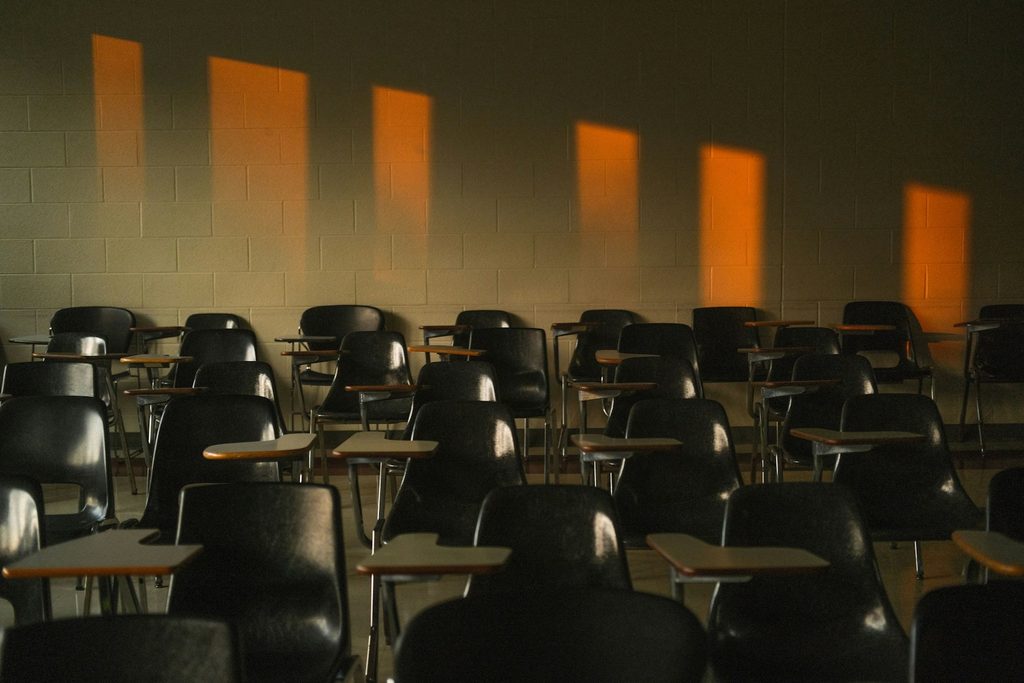
On the surface, of course we want education to promote and utilize original and effective thought. However, education did not always believe in this. Modern education is influenced by industrialization and preparing people to work in factories (I’m still shocked and disappointed each time I go into a classroom with perfectly spaced desks in a grid, and it happens far too often). Still, a lot of educational systems emphasize standardization, with provincial or national testing, and high-stakes examinations. There are benefits to ensuring individuals, across say Canada, have a quality and comparable education, and standardized testing can support that. Conversely, standardization may stifle individual uniqueness and may exclude the local context. And high-stakes summative examinations such as a final exam or the Medical College Admission Test (MCAT) are useful tools to assess and rank students. But after decades of such practices, students, teachers, and parents have learned how decision makers make their decisions (and therefore what they value?), so of course, when much rides on a test, one only learns for the test. These exams are no longer the litmus test of education; they are the product of education.
This is an old sentiment yet unfortunately a recurring problem:
- Goodhart’s Law: “when a measure becomes a target, it ceases to be a good measure” (Strathern, 1997)
- Campbell’s Law: “the more any quantitative social indicator is used for social decision-making, the more subject it will be to corruption pressures and the more apt it will be to distort and corrupt the social processes it is intended to monitor” (Campbell, 1979)
Sir Ken Robinson’s (2006) famous TED talk, Do Schools Kill Creativity? elaborates upon this. He outlines that traditional educational systems stigmatize mistakes, resulting in learners being fearful of being wrong; “if you’re not prepared to be wrong, you’ll never come up with anything original” (05:30).
Do Schools Kill Creativity? (Robinson, 2006)
Catch-22
Creativity is a highly regarded trait yet elusive to cultivate. How could a teacher support the development of 28+ different individuals’ originality and classify those individual expressions as per provincial assessment guidelines? How do teachers overcome most learners’ drive for good grades over experimentation? How can teachers mediate the production capacities of genAI-powered tools and its potential of democratization—its ability to create things that only professionals previously could, yet in practice, raises the bar for all productions to be shiny and polished grammar-perfect, robust, prose? Writing as thinking seemed to be already out of style, replaced with the conclusive five-paragraph statement (Corbin et al, 2025). Where is the room for thinking in progress amid genAI? And if it occurs in large language model chat windows, then whose thought is it really? Given this context, it’s understandable that making mistakes is not welcome. I feel this pressure too, right now as I write.
It appears as a catch-22: creativity is what our educational system stifles, yet the very thing that may offer a solution. Our current system holds grades as the target, which can increase a fear of failure, minimizing experimentation and creativity. Teachers are overworked and unable to provide individualized support, leading to generalized instruction and less originality. GenAI holds promise for personalized support yet (for reasons above) may lead to homogenization of learner performance (Laak et al., 2024). Within this system, creativity is minimally cultivated, and the people in positions of power are themselves shaped by, if not products of, the system. So what if instead, creativity is the method?
I am drawn into the world of design as inspiration. Design emphasizes not only the process but also making that process visible, contributing to both learning and a basis for using tools such as genAI (Al-Sa’di & Miller, 2026). Design, where there is hardly ever a right answer but many options worthy of exploration. Design, which celebrates individuals, originality, and effectiveness. Design that focuses on low-stakes testing, failures, and iteration. I look to leading schools of design thinking, like the Stanford d.school and IDEO U, as amazing methods of developing creativity. Their programs are hands-on, multimodal, and interdisciplinary. They’re ungraded yet filled with healthy feedback, critique, and a tolerance for failure. In design education the process is often the focus of interest, and in doing so, much of the pressure that harms creativity may be alleviated.
So, you may be wondering, as am I: how will this piece end?
I suppose I’m still thinking …
References
Abrams, R. (Host). (2026, October 13). When A.I. comes for your purpose in life [Audio podcast episode]. In The Daily. The New York Times. https://www.nytimes.com/2026/10/13/podcasts/the-daily/mathematicians-problem-ai-jobs.html
Al-sa’di, A., & Miller, D. (2026). Supporting Novice Creativity in Design Education Through Human-Centred Explainable AI. Theoretical and Applied Ergonomics, 2(2), 4. https://doi.org/10.3390/tae2020004
Abdelfatah, R., & Arablouei, R. (Hosts). (2023, July 12). No bad ideas [Audio podcast episode]. In Throughline. NPR. https://www.npr.org/2023/07/12/1187308859/no-bad-ideas
Bass, S. (Director). (1968). Why man creates [Film]. Kaiser Aluminum & Chemical Corporation. https://www.youtube.com/watch?v=ONVZ8AH4yKc
Bellemare-Pepin, A., Lespinasse, F., Thölke, P., Harel, Y., Mathewson, K., Olson, J. A., Bengio, Y., & Jerbi, K. (2026). Divergent creativity in humans and large language models. Scientific Reports, 16(1), 1279. https://doi.org/10.1038/s41598-025-25157-3
Bender, E. M., Gebru, T., McMillan-Major, A., & Shmitchell, S. (2021). On the Dangers of Stochastic Parrots: Can Language Models Be Too Big? . Proceedings of the 2021 ACM Conference on Fairness, Accountability, and Transparency, 610–623. https://doi.org/10.1145/3442188.3445922
Beghetto, R. (2024). The 4C model of creativity explained [Video]. ASU Learning Sparks. https://sparks.learning.asu.edu/videos/4-c-model-of-creativity
Campbell, D. T. (1979). Assessing the impact of planned social change. Evaluation and Program Planning, 2(1), 67–90. https://doi.org/10.1016/0149-7189(79)90048-X
Choi, Y., Sung, E., Han, J., Lee, S., Lee, D., & Lim, Y. (2025). The development and validation of a measure of creative confidence. International Journal of Technology and Design Education, 35(5), 2073–2091. https://doi.org/10.1007/s10798-025-09968-z
Corazza, G. E. (2016). Potential Originality and Effectiveness: The Dynamic Definition of Creativity. Creativity Research Journal, 28(3), 258–267. https://doi.org/10.1080/10400419.2016.1195627
Corbin, T., Walton, J., Banister, P., & Deranty, J.-P. (2025). On the essay in a time of GenAI. Educational Philosophy and Theory, 0(0), 1–13. https://doi.org/10.1080/00131857.2025.2572802
Gilhooly, K. (2024). AI vs humans in the AUT: Simulations to LLMs. Journal of Creativity, 34(1), 100071. https://doi.org/10.1016/j.yjoc.2023.100071
Farinosi, M., & Melchior, C. (2025). ‘I Use ChatGPT , but Should I?’ A Multi‐Method Analysis of Students’ Practices and Attitudes Towards AI in Higher Education. European Journal of Education, 60(2), e70094. https://doi.org/10.1111/ejed.70094
Goldstein, J. (2026). The Job AI Was Supposed to Kill [Audio podcast episode]. In What’s Your Problem? Pushkin Industries https://www.pushkin.fm/podcasts/whats-your-problem/the-job-ai-was-supposed-to-kill
Guilford, J. P. (1950). Creativity. American Psychologist, 5, 444 – 454.
Hawley-Dolan, A., & Winner, E. (2011). Seeing the mind behind the art: People can distinguish abstract expressionist paintings from highly similar paintings by children, chimps, monkeys, and elephants. Psychological Science, 22(4), 435–441. https://doi.org/10.1177/0956797611400915
Hubert, K. F., Awa, K. N., & Zabelina, D. L. (2024). The current state of artificial intelligence generative language models is more creative than humans on divergent thinking tasks. Scientific Reports, 14(1), 3440. https://doi.org/10.1038/s41598-024-53303-w
Karwowski, M., Zielińska, A., & Jankowska, D. M. (2022). Democratizing Creativity by Enhancing Imagery and Agency: A Review and Meta-Analysis. Review of Research in Education, 46(1), 229–263. https://doi.org/10.3102/0091732X221084337
Kaufman, J. C., & Beghetto, R. A. (2009). Beyond Big and Little: The Four C Model of Creativity. Review of General Psychology, 13(1), 1–12. https://doi.org/10.1037/a0013688
Koivisto, M., & Grassini, S. (2023). Best humans still outperform artificial intelligence in a creative divergent thinking task. Scientific Reports, 13(1), 13601. https://doi.org/10.1038/s41598-023-40858-3
Krajcer, L., Schut, A., Wang, P., Quanjer, A.-J., & Gonçalves, M. (2026). The hidden costs of AI-assisted ideation: Empirical findings on ChatGPT’s impact on novice designers’ creative confidence and design process. Design Science, 12, e16. https://doi.org/10.1017/dsj.2026.10060
Laak, K.-J., Abdelghani, R., & Aru, J. (2024). Personalisation is not Guaranteed: The Challenges of Using Generative AI for Personalised Learning. In Y.-P. Cheng, M. Pedaste, E. Bardone, & Y.-M. Huang (Eds.), Innovative Technologies and Learning (pp. 40–49). Springer Nature Switzerland. https://doi.org/10.1007/978-3-031-65881-5_5
Lupi, G. (2026). In defense of the detour: On craft, A.I. and what gets lost when we skip the slow part. The New York Times. https://www.nytimes.com/interactive/2026/09/27/opinion/ai-art-creativity.html
OECD. (2023). PISA 2022 Assessment and Analytical Framework. OECD Publishing. https://doi.org/10.1787/dfe0bf9c-en
Province of British Columbia. (2015). Core Competencies. British Columbia’s Curriculum. https://curriculum.gov.bc.ca/competencies
Province of British Columbia. (2015). Creative Thinking. British Columbia’s Curriculum. https://curriculum.gov.bc.ca/competencies/thinking/creative-thinking
Robinson, K. (2006). Do schools kill creativity? [Video]. TED Conference 2006. TED. https://www.ted.com/talks/sir_ken_robinson_do_schools_kill_creativity
Runco, M. A., & Jaeger, G. J. (2012). The Standard Definition of Creativity. Creativity Research Journal, 24(1), 92–96. https://doi.org/10.1080/10400419.2012.650092
Sevimli-Celik, S., & Güvelioglu, E. (2026). From comfort zone to growth zone: Experiential projects as catalysts for creativity in pre-service teachers. Thinking Skills and Creativity, 59, 101994. https://doi.org/10.1016/j.tsc.2025.101994
Strathern, M. (1997). ‘Improving ratings’: Audit in the British university system. European Review, 5(3), 305–321. https://doi.org/10.1002/(SICI)1234-981X(199707)5:33.0.CO;2-4
Wang, D., Huang, D., Shen, H., & Uzzi, B. (2025). A large-scale comparison of divergent creativity in humans and large language models. Nature Human Behaviour, 10(3), 531–540. https://doi.org/10.1038/s41562-025-02331-1
Youn, H., Strumsky, D., Bettencourt, L. M. A., & Lobo, J. (2015). Invention as a combinatorial process: Evidence from US patents. Journal of the Royal Society Interface, 12(106), Article 20150272. https://doi.org/10.1098/rsif.2015.0272